
You’ve just bought a gorgeous Victorian terrace in Camden’s conservation area. Congratulations! The period features are stunning, the street has actual character, and you’re already planning that tasteful exterior refresh to make it properly yours.
Then you remember the dreaded three words: conservation area restrictions. Suddenly you’re wondering if you need permissions to change a lightbulb, whether your chosen paint colour requires a council meeting, and if that dodgy render job from the previous owner is now your problem forever.
We work with conservation area homeowners across Camden all the time – from the Regent’s Park estates to the streets around Primrose Hill and Gospel Oak. And honestly? The confusion is real.
The truth is, conservation area rules in Camden and elsewhere aren’t designed to make your life miserable. They’re there to protect what makes Camden’s streets so special while still letting you maintain and improve your property.
You absolutely can refresh your exterior, repair those knackered sash windows, and sort out the paintwork that’s been annoying you since you moved in. But you do need to know the rules. Because getting it wrong doesn’t just mean a stern letter from the council – it can mean expensive corrections, potential legal issues, and a whole lot of stress you really don’t need.
Let’s break down what conservation area living actually means for Camden homeowners, and how to navigate it without losing your mind.
What is a Conservation Area?
Right, let’s start with the basics because there’s a lot of confusion about what conservation areas actually are.
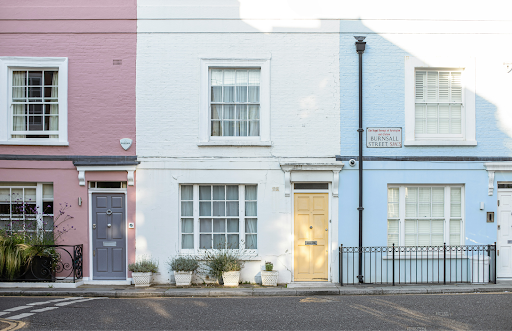
A conservation area is a designated part of a town or city that’s been flagged by the local council as having special architectural or historical interest. It’s their way of saying “this place has character worth protecting” – whether that’s Georgian terraces, Victorian shopfronts, or just a particularly nice stretch of street.
In Camden, we’re absolutely loaded with them. You’ve got the grand stuff around Regent’s Park and Bloomsbury, the quirky bits of Camden Town itself, the villagey feel of Primrose Hill, and everything in between. Walk around and you’ll see why!
Why Do Conservation Areas Exist?
The rules came about through the Planning (Listed Buildings and Conservation Areas) Act 1990, which basically gave councils the power to protect areas (not just individual buildings) from inappropriate development.
It sounds a bit bureaucratic, but the intention was pretty sound: stop people ripping out sash windows and slapping on uPVC, or demolishing perfectly good Victorian buildings to put up something that’d look dated in five years.
The whole point is protecting what makes these streets special – the architectural character, the historical interest, the way buildings relate to each other. It’s not about individual houses being particularly grand (though some are). It’s about the collective streetscape and how it tells Camden’s story.
Am I in a Conservation Area in Camden?
This is usually the first question people aks when they’re planning exterior work in Camden, and it’s a good one to get answered early because it changes what you can and can’t do.
The easiest way to find out whether you’re in a conservation area in Camden is to use Camden Council’s online planning map.
Why Does Camden Have So Many Conservation Areas?
Camden has over 30 conservation areas dotted across the borough. That’s a lot. More than most London boroughs, actually. It’s because Camden’s got this unusual mix of grand Georgian estates, Victorian working-class terraces, inter-war developments, and everything else that happened in between.
Camden’s Major Conservation Areas
Without listing all 30 of them, here are the main conservation areas in Camden:
Central Camden
North Camden:
South Camden:
- Regent’s Park
- Fitzrovia
- Somers Town
The Benefits of Living in a Conservation Area
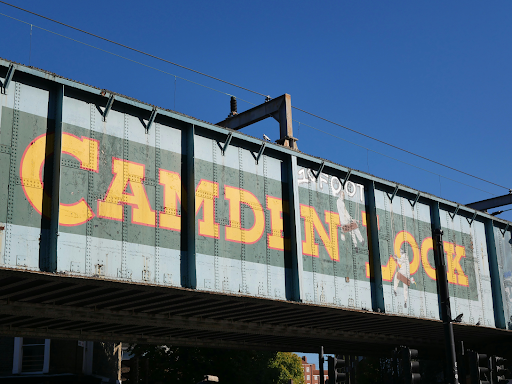
Now, before you start thinking this all sounds like a massive pain, there are actual upsides to living in a conservation area. Property values tend to hold up better because the area’s character is protected – you’re not going to wake up one day to find your neighbour’s painted their house bright orange or demolished theirs for a glass box extension. There’s a certain… predictability to it. Your street will still look like your street.
Plus, and this matters more than people admit, there’s something quite nice about living somewhere that has a sense of place. Camden’s conservation areas aren’t museum pieces – people live in them, work in them, raise families in them. The rules just make sure that when things need updating or fixing, it’s done in a way that doesn’t trash what made the place special in the first place.
Understanding Camden Conservation Area Rules: The Basics
Right, so you’ve confirmed you’re in a conservation area. Now what? Let’s talk about Camden conservation area rules and what they actually mean for you as a homeowner.
What Does Conservation Designation Mean?
Being in a conservation area doesn’t mean your house is listed (that’s a whole different kettle of fish). It means the area your house sites in has been deemed worth protecting.
For you, this means certain things you could normally do without asking permission now need approval. The council gets a say in changes that affect your property’s exterior and how it contributes ti the street scene. Internal work? Generally fine, crack on. But anything visible from the street? That’s where things get more complicated.
Permitted Development Rights
Under normal circumstances, homeowners have what called “permitted development rights”. These are things you can do to your property without needing planning permission – stuff like small extensions, loft conversions, replacing windows, that sort of thing.
Conservation areas automatically remove some of these rights. Things that’d normally be fine suddenly need permission because they could affect the area’s character.
Article 4 Directions
Now, some parts of Camden have what’s called an Article 4 Direction on top of the standard conservation area rules.
Article 4 Directions remove additional permitted development rights. Things you might be able to do in one Camden conservation area suddenly need permission in another because there’s an Article 4 Direction in place. Common restrictions include:
- Painting your house a different colour
- Changing roof materials
- Altering windows and doors
- Front boundary treatments
- Rendering or cladding
Not every Camden conservation area has an Article 4 Direction, but quite a few do – particularly in areas like Bloomsbury, Hampstead, and around Regent’s Park where the architectural character is especially distinctive.
Planning Permission in Camden Conservation Areas
Planning permission in conservation areas works differently than it does elsewhere, and understanding when you need it can save you a world of hassle (and potentially expensive corrections down the line).
When Do You Need Planning Permission?
In a conservation area, you need planning permission for work that would normally be allowed under permitted development rights but isn’t anymore because of the conservation designation.
The general rule of thumb is that if your work involves building something new, demolishing something existing, or making significant changes to your property’s exterior appearance, you probably need permission.
When it comes to exterior painting and decorating in Camden, significant changes to appearance can require planning permission. But “significant” is subjective, right?
In practice, the council considers changes significant if they:
- Alter the architectural character of your property
- Affect how your property contributors to the street scene
- Involve removing or covering original features
- Change materials or details that are typical of the conservation area
Basically, if you’re changing something that people can see from the street and it’s not routine maintenance or a like-for-like repair, it’s worth checking whether you need permission.
Camden Conservation Area Rules for Exterior Changes
So, what can you do to your house without filling in forms, and what’s going to need approval? Let’s break down the Camden conservation area rules for the most common exterior projects.
What Can You Do Without Permission?
Good news first – there’s plenty of maintenance and repair work you can crack on with. Conservation area rules aren’t designed to stop you looking after your property.
Repainting in Similar or Original Colours
If your house is already painted and you want to repaint it in the same colour (or something very similar), you’re generally fine to go ahead. This counts as maintenance, not alteration.
The key word here is “similar”. If your house is painted white and you’re repainting it cream or another shade of white, that’s likely classed as maintenance. If it’s currently white and you fancy painting it pink, that’s a different conversation.
For unpainted brickwork, you shouldn’t be painting it at all without permission – that’s considered an alteration to the building’s character.
Like-for-Like Repairs
This is your bread and butter maintenance work. Replacing damaged materials with identical or very similar ones doesn’t need permission.
For example:
- Replacing broken roof slates with matching slates
- Repairing rotten section of timber windows with a new timber to match
- Replacing damaged bricks with reclaimed brick of the same type
- Fixing cracked or blown render with matching render
- Repairing or replacing broken sash cords
- Patching up damaged pointing
In these instances, you’re putting back what was there, not changing it. Same materials, same design, same appearance.
General Maintenance Work
Cleaning, repairing, and maintaining your property’s exterior is actively encouraged. The council wants you to keep your building in good nick.
For example, the following works are definitely fine:
- DOFF steam cleaning brickwork or stonework
- Repointing brickwork with appropriate mortar
- Clearing gutters and repairing downpipes
- Fixing loose roof tiles or slates
- Treating timber for rot or insect damage
- Repairing cracks in render or stucco
- Regular decoration and upkeep
If you’re keeping your building weather-tight and well-maintained using appropriate methods and materials, you’re doing exactly what conservation area designation is meant to encourage.
Internal Alterations
Pretty much anything you do inside your house is your business. Conservation area rules apply to exteriors and what’s visible from public spaces, not your internal layout or decoration.
Rewire, replumb, install a new kitchen, redecorate – all fine. The only exception is if your building is also listed (which is separate from being in a conservation area), in which case internal changes can need consent too. But for non-listed buildings in conservation areas? Your interior is yours to change.

What Does Need Permission or Consent?
Now for the stuff where you need to ask first. This is where Camden conservation area rules really bite.
Changing Paint Colours Significantly
Want to repaint your cream house dark grey? Or your red brick house white? You need permission.
Any significant change to your property’s external colour scheme requires planning permission in most Camden conservation areas, especially those with Article 4 Directions.
The council will assess whether your proposed colour is appropriate for the building type, the street, and the wider conservation area. Victorian terraces painted in traditional colours? Usually fine. The same terrace in hot pink? Not happening.
Even if there’s no Article 4 Direction, painting previously unpainted brickwork or rendering and painting a brick building typically needs permission because you’re materially altering the building’s appearance.
Window & Door Replacements
Replacing windows or doors – even with seemingly similar ones – almost always needs planning permission in Camden conservation areas.
It doesn’t matter if you’re replacing knackered uPVC with new uPVC, or putting in “Georgian-style” double glazing. If you’re changing the windows or doors, you need permission.
The council cares because:
- Original windows and doors are significant features
- Modern replacements often get details wrong (glazing bar thickness, opening mechanisms, proportions)
- uPVC is almost never appropriate in conservation areas
- Windows contribute massively to a building’s character
The only exception is true like-for-like replacement – if a timber sash window is beyond repair and you’re replacing it with a properly made timber sash window with the same design, that’s repair rather than replacement. But even then, if there’s an Article 4 Direction, you might need permission.
Cladding or Rendering Changes
Adding render or cladding to an unrendered building needs planning permission. Always. The council will want to know why you’re covering the original material and whether the proposed finish is appropriate.
Similarly, if your building is already rendered and you want to:
- Remove the render to expose brick
- Change from smooth render to textured render (or vice versa)
- Paint previously unpainted render
You need permission. These changes alter the building’s appearance and the character of the street.
External wall insulation (which involves adding render or cladding) definitely needs permission and often gets refused in conservation areas because it changes building proportions and covers original details.
Roof Alterations
Your roof is a key part of your building’s appearance, especially in terraced streets where rooflines create the street’s visual rhythm.
The following changes need permission:
- Changing roof materials (slate to tile, or vice versa)
- Altering the roof shape or pitch
- Adding dormers or roof windows on front slopes
- Installing solar panels on front roof slopes (sometimes even rear slopes)
- Removing or altering chimneys
- Adding roof lanterns or skylights visible from the street
Even re-roofing with different materials needs permission. If your Victorian terrace has slate and you want to replace it with concrete tiles because they’re cheaper, the council will say no. Conservation areas are about maintaining traditional materials and appearance.
Rear roof slopes sometimes have more flexibility, but it varies by conservation area and what’s visible from public vantage points.
Front Boundary Walls, Gates & Railings
Your front boundary treatment is part of the street scene, so changes need permission.
What typically needs approval:
- Removing or lowering front walls
- Removing railings or gates
- Building new boundary walls
- Installing new gates (especially if replacing open railings)
- Changing from one boundary type to another
The classic example is people wanting to remove front walls to create off-street parking. In conservation areas, this usually gets refused because it harms the street’s character. Those front gardens and boundary walls are part of what makes the conservation area special.
If you’ve got original railings, don’t remove them. If they’re missing and you want to reinstate them, the council will probably love you for it – but you still need permission.
Removing Chimneys or Other Original Features
Chimneys are considered important features in most Camden conservation areas, even if they’re not in use. Removing them – even partially – needs permission.
Other features that need permission to remove or alter:
- Bay windows
- Decorative brickwork or stonework
- Cornices and string courses
- Original porches
- Boot scrapers and other historic details
- Cast iron or terracotta details
Basically, if it’s an original architectural feature that contributes to your building’s character, you need permission to mess with it. The council’s position is usually that original features should be repaired rather than removed.
The Grey Areas
There are some situations where it’s genuinely unclear whether you need permission. Repairing a window with slightly different timber? Repainting in a “similar but not identical” colour? Replacing one slate tile type with another that’s close but not exact?
In these grey areas, our advice is always to err on the side of caution. A quick call to Camden’s planning department or a pre-application enquiry can clarify things. It’s much better to ask and be told “no, you’re fine, that’s just maintenance” than to assume you’re fine and get an enforcement notice.
The Paint & Colour Question in Camden Conservation Areas
Paint colour causes more confusion and disagreement than almost anything else when it comes to Camden conservation area rules. People assume they can paint their house whatever colour they like – it’s their house, after all. But in conservation areas, it’s not quite that simple.
Why Does Colour Matter So Much?
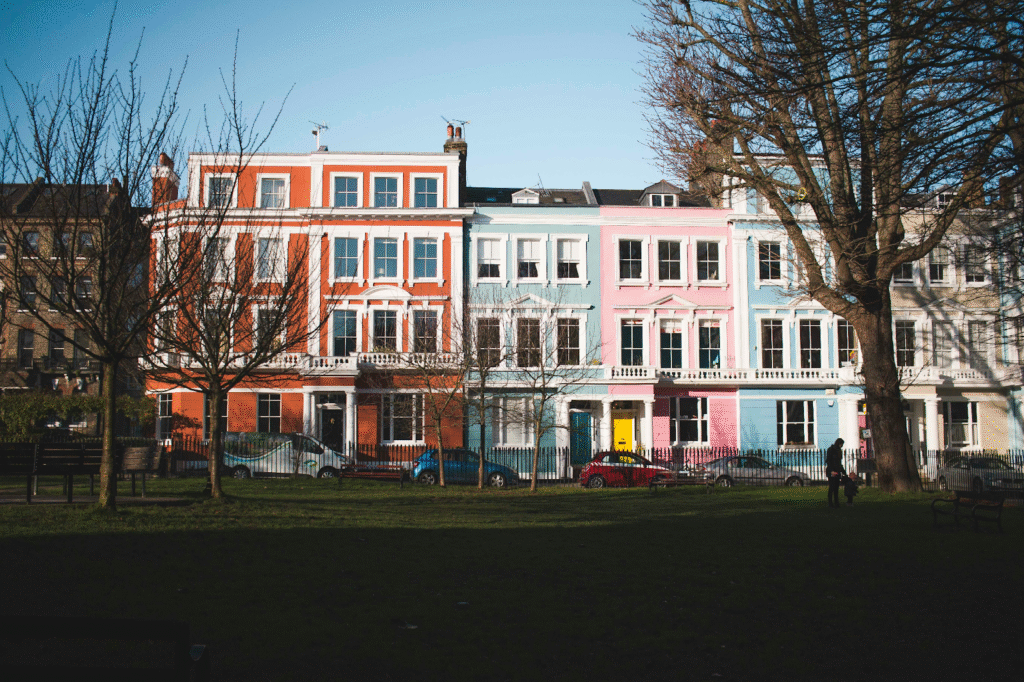
Walk down a street in Bloomsbury or Primrose Hill and you’ll notice the colours work together. Creams, off-whites, soft greys, traditional stone colours. It’s not an accident – it’s what gives these streets their cohesive character.
Conservation areas protect this collective appearance. Your house doesn’t exist in isolation; it’s part of a group of buildings that create a street scene. When someone paints their Georgian terrace bright purple, it doesn’t just affect their property – it disrupts the whole street’s character.
That’s why Camden Council takes external colours seriously. It’s not about being controlling or stifling individual expression. It’s about recognising that in these historically significant areas, buildings need to work together visually.
Traditional Colour Palettes in Camden
Camden Council strongly prefers traditional colour palettes that reflect the original design intentions of buildings and the historical character of each conservation area.
For Georgian and Victorian properties (the majority of Camden’s conservation areas):
- Off-whites and creams (stone colours)
- Soft greys
- Traditional browns and earth tones for woodwork
- Dark colours for railings and basement areas (black, dark green, dark grey)
- Occasionally muted heritage colours for doors (deep reds, dark blues, dark greens)
What they really don’t like:
- Bright, modern colours (vivid blues, bright yellows, hot pinks)
- Brilliant white on period properties (it’s too stark and historically inaccurate)
- Colours that contrast aggressively with neighbouring properties
- Painting previously unpainted brick in any colour
The general principle is this: if you can’t find evidence that your colour choice would have been used on buildings of that period, it’s probably not appropriate for a conservation area.
Get more inspiration with our guide to the best Victorian house paint colours.
Camden-Specific Guidance for Different Areas
Different conservation areas in Camden have different characters, and the council’s expectations vary accordingly.
Bloomsbury & Regent’s Park
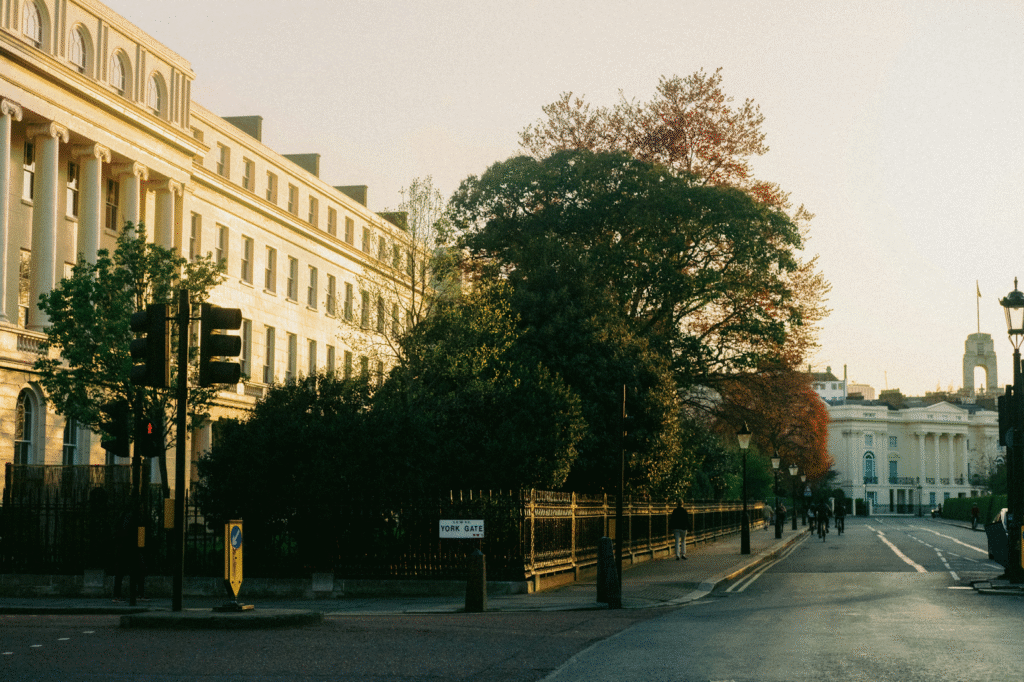
These are the grand Georgian estates. Expect the council to be strict about colours here. Traditional stone colours, soft greys, and off-whites are appropriate. The Nash terraces around Regent’s Park have very specific colour schemes that contribute to their architectural unity.
We’ve worked on properties here where the council rejected cream in favour of a more accurate stone colour because the consistency of the terrace was considered critical.
Primrose Hill & Hampstead
These areas have more variety – Georgian, Victorian, and Edwardian properties mixed together. There’s slightly more flexibility, but it’s still traditional palettes. You’ll see more colour on front doors (which is acceptable), but house colours remain muted.
Victorian properties here can sometimes get away with slightly warmer creams or very soft heritage colours, but nothing bold.
Camden Town
The conservation area here is more about Victorian commercial and residential buildings. There’s historically been more colour variety, especially on shopfronts. Residential properties still need traditional colours, but there’s recognition that this was a working-class area with different architectural character than Bloomsbury.
Kentish Town & Gospel Oak
Similar to Camden Town – Victorian terraces that were never as grand as the Georgian estates. Traditional colours are still expected, but the council understands these were modest working-class homes, not grand townhouses.
That said, “modest” doesn’t mean “paint it whatever you want.” It just means the expectations are based on Victorian vernacular architecture rather than Georgian formality.
How Do I Apply for Planning Permission in a Camden Conservation Area?
So you’ve figured out you need planning permission for your proposed work. What now? Applying for planning permission in a conservation area isn’t as terrifying as people think, but there are specific steps and documents you’ll need to get right.
Step 1: Gather Your Information
Before you start filling in forms, you need to know exactly what you’re proposing. Vague ideas don’t cut it – you need specific details about materials, colours, designs, and dimensions.
Take photos of your property as it currently is, from multiple angles. Note down existing materials, colours, and any features that’ll be affected by your work. This documentation becomes crucial later.
Step 2: Check What Type of Application You Need
Most exterior work in conservation areas needs either:
- Full planning permission (for extensions, alterations, most external changes)
- Householder planning permission (a simpler version for domestic properties)
For demolition work, even partial demolition, you’ll need planning permission. The old “conservation area consent” as a separate application doesn’t exist anymore – it’s all just planning permission now, but with that conservation area scrutiny baked in.
Step 3: Prepare Your Documents
Camden Council needs specific documents for planning applications in conservation areas. Missing any of these will delay your application.
Standard requirements:
- Completed application form (use the Planning Portal website)
- Site location plan (scaled at 1:1250, showing your property outlined in red)
- Block plan (scaled at 1:500 or 1:200, showing the property and surrounding area)
- Existing and proposed elevations (what your building looks like now vs what it’ll look like after)
- Existing and proposed floor plans (if relevant to your application)
- Design and Access Statement (explains your proposals and how they respect the conservation area)
Conservation area specific:
- Heritage Statement (for significant changes – more on this below)
- Materials specifications (exact details of what you’re using)
- Photographs of the existing property and street scene
- Historical information about the building (if available)
The drawings need to be proper architectural drawings, to scale, with dimensions marked. Phone photos with arrows drawn on them won’t work. If you’re not confident doing these yourself, you’ll need to hire someone who can – an architect, architectural technician, or planning consultant.
Step 4: Write Your Heritage Statement (If Required)
For anything that might affect the conservation area’s character, Camden will want a heritage statement. This is basically your argument for why your proposal is appropriate.
What a heritage statement should cover:
- Description of your property and its significance
- How it contributes to the conservation area’s character
- What you’re proposing to change and why
- How your proposal respects the conservation area’s special interest
- Any historical research you’ve done
- Why your proposed materials/design are appropriate
Don’t just write “this is sympathetic to the area.” Explain why it’s sympathetic. Reference the conservation area appraisal document. Show you understand what makes the area special and how your work fits within that context.
Good heritage statements acknowledge what’s significant about the existing building and demonstrate that the proposal has been designed with that significance in mind. They’re not about persuading the council to ignore conservation concerns – they’re about showing you’ve taken those concerns seriously in your design.
Step 5: Submit Your Application
Applications must be submitted through the Planning Portal. You can’t just email Camden Council directly with your plans.
You’ll need to pay the application fee when you submit (more on costs below). Make sure everything’s uploaded correctly – the Planning Portal can be finicky about file formats and sizes.
Once submitted, you’ll get an application reference number. Keep this safe – you’ll need it to track your application’s progress.
Step 6: Wait for Validation
Camden’s planning department will check your application has all the required information. If something’s missing, they’ll contact you and pause the clock until you provide it.
This is why getting everything right first time matters. Missing documents can add weeks to the process.
Step 7: The Consultation Period
Once validated, your application goes through a consultation period. This typically includes:
- A notice posted on or near your property
- Letters to neighbouring properties
- Publication on Camden’s planning website
- Sometimes consultation with amenity societies (like the Camden Civic Society)
Anyone can comment on your application during the consultation period (usually 21 days). Neighbours often do, especially if your work affects them. The council considers these comments when making their decision.
Step 8: The Decision
A planning officer will assess your application against planning policies and the conservation area’s character appraisal. For conservation area applications, they’ll specifically consider whether your proposal preserves or enhances the conservation area’s character.
They might ask for additional information or amendments to your proposal. Be responsive – officers are usually trying to help you get to an approvable scheme.
The decision will be one of three:
- Approved (with or without conditions)
- Refused (with reasons why)
- Withdrawn (if you decide to pull the application)
Step 9: Get to Work
Once you’ve got planning permission, you’ve got three years to start the work.
Keep a copy of your approval notice and approved plans on site during the work. Building Control might want to see them, and you’ll need them if there are any questions later.
If you want to make changes to the approved plans once you’ve started, you might need a new application or an application to vary conditions. Don’t just deviate from the approved plans and hope nobody notices.
What Happens if I Break Conservation Area Rules?
Nobody wants to think about getting caught doing unauthorised work, but understanding the consequences helps you make informed decisions. And honestly, the enforcement process isn’t as scary as people imagine – though it’s definitely something you want to avoid if possible.
If you’ve done work in a conservation area without permission (and you needed it), Camden Council has powers to make you put things right. Here’s how it typically unfolds.
Step 1: Someone Notices
First, the council needs to become aware there’s an issue. We’ll cover how that happens in a minute, but the key point is enforcement isn’t automatic – they have to know about it.
Step 2: Planning Contravention Notice (Maybe)
If the council suspects there’s been a breach, they might send a Planning Contravention Notice. This is essentially them asking “what have you done, when did you do it, and did you have permission?”
You’re legally required to respond within 21 days. Don’t ignore it – that makes things worse and can lead to prosecution just for not responding.
Be honest in your response. Lying on a Planning Contravention Notice is a criminal offense. If you did unauthorized work, say so. Claiming you didn’t when they’ve got photos is just digging yourself deeper.
Step 3: Investigation
The council will assess whether there’s actually been a breach, how serious it is, and what action (if any) is appropriate.
Not every breach leads to enforcement. They have discretion about whether to take action, and they consider factors like:
- How harmful is the breach to the conservation area’s character?
- How long ago did it happen? (There are time limits on enforcement)
- Would enforcement action be proportionate?
- Is there a realistic chance of getting retrospective permission?
Minor breaches that happened years ago and aren’t causing much harm might get a warning letter rather than formal enforcement. Major, recent breaches that significantly harm the conservation area’s character are more likely to result in action.
Step 4: Enforcement Notice (If They Decide to Act)
If Camden decides to take action, they’ll issue an Enforcement Notice. This is a legal document that:
- States what the breach is
- Specifies what you must do to remedy it
- Gives you a deadline for compliance (usually 3-6 months, depending on what’s required)
- Explains your right to appeal
Typical requirements might be:
- Remove unauthorized additions or alterations
- Repaint in an approved colour
- Reinstate features you’ve removed
- Apply for retrospective permission
Step 5: Compliance or Appeal
You’ve got two choices:
Comply: Do what the notice requires within the specified timeframe. Once you’ve complied, take photos and notify the council. The matter ends there.
Appeal: You have the right to appeal to the Planning Inspectorate within a specific timeframe (usually about a month). Grounds for appeal include:
- Permission should have been granted
- The enforcement notice requirements are excessive
- The work is lawful (the council got it wrong about it being a breach)
- The time limit for enforcement has expired
Appeals take several months to decide. During the appeal process, you don’t have to comply with the notice – the deadline is suspended until the appeal is determined.
Step 6: If You Don’t Comply
Ignoring an enforcement notice is a criminal offense. Camden can prosecute you in the magistrates’ court.
Potential consequences:
- Fines up to £20,000 for breaches not involving listed buildings
- Criminal record
- Council can carry out the required work themselves and bill you for the costs (plus a markup)
- Continued non-compliance can lead to further prosecution
It very rarely gets to this point because most people comply once they’ve got an enforcement notice. But it can happen if someone’s being deliberately obstinate.
Conservation area rules can seem like a right faff when you just want to paint your house or fix some dodgy windows. But once you understand what you’re working with, it’s honestly not that complicated.
The key things to remember: check whether you’re in a conservation area before you do anything to your exterior. Understand the difference between maintenance (almost always fine) and alterations (often need permission). Use appropriate materials and methods for period properties. And when you’re genuinely not sure whether something needs approval, ask before you start rather than dealing with enforcement notices later.
Need Help with Exterior Work on Your Camden Conservation Area Property?
Get in touch for some proper advice about your conservation area project.